

Peptide Therapy Foundations: Secretagogues
A clinician's tour of the growth hormone secretagogues, from GHRH analogs to ghrelin-receptor agonists, covering mechanism, evidence.
Course Overview
What this course covers
This course examines the growth hormone secretagogues as a working class: the peptides and small molecules that prompt the pituitary to release growth hormone rather than supplying the hormone directly. It is built for clinicians who want to understand how each agent acts, where the evidence sits, and how the choices differ at the level of receptor, half-life, and signaling pattern.
The lessons fall into two broad families. The first is the GHRH analogs, including Sermorelin, Mod GRF 1-29, CJC-1295, and Tesamorelin, which engage the growth hormone releasing hormone receptor and tend to preserve the body’s pulsatile, feedback-controlled secretion. The second is the ghrelin and growth hormone secretagogue receptor agonists, including Ipamorelin, Hexarelin, GHRP-2, GHRP-6, MK-677, and Anamorelin, which act through a separate pathway and vary in selectivity, potency, and off-target signaling.
Each lesson is grounded in the same clinical lens: what the agent is, how it works, what the evidence shows, and what a practitioner weighs before applying it. Together they give you a comparative map of the class so you can reason about an individual peptide in the context of its alternatives.
What you'll explore
- Distinguish GHRH analogs from ghrelin-receptor agonists by mechanism and signaling pattern
- Compare individual secretagogues on receptor target, selectivity, and half-life
- Identify how each agent supports pulsatile growth hormone release
- Apply a consistent clinical framework when evaluating a secretagogue for use
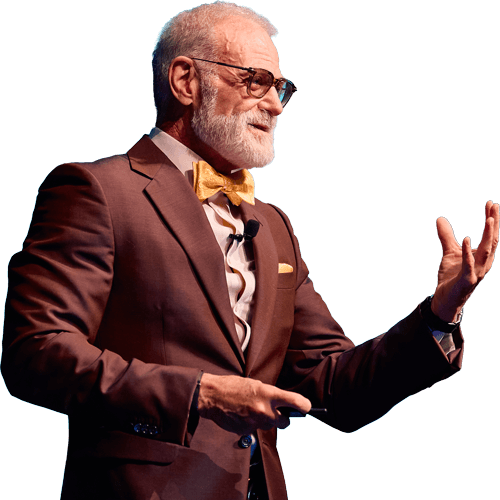
William Seeds, MD
For more than four decades, Dr. William A. Seeds has advanced medical science through clinical practice, research, and physician education. A board-certified Orthopaedic Surgeon in General and Sports Medicine, he served as Chief of Surgery at University Hospitals Conneaut Medical Center and Director of The Ohio Bone & Joint Institute before founding the Seeds Scientific Research & Performance (SSRP) Institute. He is also Founder and Medical Director of the Redox Medical Group in Beverly Hills and the bestselling author of Peptide Protocols, The Redox Promise, and The Quantum Power of GLP-1 Peptides. His contributions to sports medicine have been recognized at the NFL Hall of Fame, and he has consulted for athletes across the NFL, NHL, MLB, NBA, and Dancing with the Stars.

Questions? Our Provider Care Team is here to help.
We'd love to help you determine the best next steps on your Cellular Medicine journey.