

Introduction
In March of this year, I did a Rabbit Hole (Episode 079) in which I discussed a number of trends marketed to the wider public promising sleep improvement. As you know, a huge swath of the population suffers from sleep disturbance. According to the NIH, approximately 30% to 40% of US adults report sleep disturbances, deficiencies, or dysregulation, with an estimated 50 to 70 million Americans affected by chronic sleep disorders. Roughly 1 in 3 adults does not consistently achieve the recommended amount of nightly sleep, with about 14.5% to 17.8% reporting frequent, severe difficulties falling or staying asleep.
Further, we know that there is extensive clinical evidence that links chronic sleep dysregulation—including short duration, poor quality, and irregularity—to major chronic diseases. Research shows poor sleep is a strong predictor of cardiovascular diseases (hypertension, atrial fibrillation), metabolic disorders (type 2 diabetes, obesity), and neurodegenerative conditions. And of this group many also suffer from metabolic dysfunction that can result in heart disease, type-2 diabetes, and neurodegenerative disorders.
It’s for this reason that we as clinicians must help our patients choose possible remedies that actually work.
How to Help Our Patients Improve Their Sleep

Sleep dysregulation is an incredibly difficult process to treat in patients, but when we have a more comprehensive and accurate understanding of it ourselves, we’ll be in a better position to help our patients. Indeed, I’ve found it beneficial for my patients to understand that any problem with sleep is rooted in a disruption of circadian rhythm and that recognizing this underlying biology will not only increase their understanding of their own situation but also help them make more informed choices of products or strategies marketed to them. We’ve been hearing on social media about hacks that proclaim quick fixes to sleep disruption – dark showering being a recent addition – but it behooves us to clarify the circadian biology involved; specifically, let’s look at the roles of light exposure, thermal regulation, and autonomic signaling or tone.
Light Exposure and Melatonin Production
Let’s begin by addressing the role of how and why melatonin induces sleep and that targeting melatonin production from the pineal gland can lead to a relatively good sleep pattern. (As I mention below, although supplementing with melatonin can help initially, it’s not the ultimate solution as we always say.)
Melatonin production in the pineal gland is primarily induced by darkness, which triggers a neural pathway from the retina to the brain when light levels decrease. The process is driven by the release of norepinephrine, which stimulates melatonin synthesis from tryptophan-derived serotonin during nighttime hours. The absence of light is the main trigger. Low light or darkness signals the suprachiasmatic nucleus (SCN) in the brain, which tells the pineal gland to start releasing melatonin. When light falls on the retina, it inhibits melatonin production. When it is dark, this inhibition stops, allowing the pineal gland to produce melatonin. The pineal gland converts serotonin into melatonin (using the enzyme AANAT) in response to norepinephrine release.
Melatonin levels rise as the sun goes down, typically peaking between 2 and 4 a.m.. Bright light, especially blue light, prevents the production of melatonin. Bright lights like LED lights have a considerable amount of blue light. If I'm working late in an office, watching television, or working on a computer late into the night, I’m being exposed to a significant amount of blue light, which will interfere with natural melatonin production: it goes through the optic nerve to the suprachiasmic nuclei in the hypothalamus, which in turn signals the melanopsin from the retinal ganglion and causes this signaling to stop or change the circadian phase. Bright light essentially delays the circadian phase by stopping the release of melatonin. Some well researched papers have been published that show that a seventy percent decrease in melatonin production can occur in response to the exposure to bright lights.
So do such products as blue blocker glasses work? Do computer and phone screens that soften or filter the impact of blue light actually reduce the stimulus of the suprachiasmatic nuclei, central pacemaker there in the hypothalamus? The results are not at all consistent.
The idea behind this technology is the attempt to influence the central pacemaker in the hypothalamus and therefore impact circadian biology before it sends signals to the other pacemakers in the cells that influence mitochondrial function. So let’s take a closer look at this process.
Again, blue light suppresses melatonin production by delaying the circadian phase and also by increasing alertness at night. Melatonin is also important because it's a mitochondrial redox modulator. The mitochondria undergoes significant changes at night when we sleep and melatonin is very important in that process of handling oxidative stress, managing NAD+ oscillations with AMPK, and overall working on maintaining redox balance.
Bright lights can reduce that early night melatonin production and shorten its duration. Further, this lack of melatonin accompanied by alertness, which many people experience as “mind racing,” is related to the impact on the cortisol rhythm.
Further, inside cells, the clock genes are inhibited from doing their jobs. CLOCK and BMAL1 proteins initiate the transcription of Per and Cry genes. These proteins build up and eventually inhibit their own production, creating a cycle that takes approximately 24 hours.While a master clock exists in the brain's hypothalamus (suprachiasmatic nucleus), these clock genes operate in cells throughout the body and control daily cycles of sleep/wakefulness, blood pressure, metabolism, and even contribute to learning and plasticity. Disruption of these genes is associated with metabolic syndrome, cancer, and sleep disorders
Thermal Regulation
Thermal regulation acts as a vital, daily synchronizer for the circadian clock by creating a ~24-hour cycle of core body temperature (CBT) changes. The hypothalamus drives a 1–3 °C fluctuation, lowering temperature at night to promote sleep and raising it before waking to increase alertness, thereby synchronizing peripheral tissue clocks and maintaining homeostasis. Thermal changes trigger specific proteins—such as heat shock transcription factors and cold-inducible RNA-binding proteins—that modulate clock gene expression.
The thermal regulation dimension of the circadian process is what’s being targeted by dark showering (specifically, the heat from the shower an hour or two before bed). This combination of effects increases peripheral vasodilatation. This dilatation dissipates heat and accelerates our core temperature decline, which is important for getting your body ready for sleep. (Keep in mind that in sleep our core temperature needs to go down; it's a biologic and physiologic change that has to occur for sleep.) Studies and metanalyses of sleep studies have shown that taking a warm/hot shower before bed can induce a faster onset of sleep by nine to ten minutes, help with deeper, more restful sleep, and generally enhance the overall quality of sleep.
Autonomic Signaling and Tone
The third aspect of sleep relates to the autonomic shift that needs to occur to regulate parasympathetic tone. The parasympathetic nervous system (PSNS)—often called the "rest and digest" system—is essential for initiating and maintaining high-quality sleep. It works by increasing parasympathetic tone (vagal tone), which acts as a "vagal brake" to slow the heart rate, lower blood pressure, and calm the body, allowing for deep, restorative sleep stages.
As we know, the sympathetic nervous system (SNS) dominates during the day to manage daily stresses and activities. As light fades and evening descends, the body shifts from SNS dominance to PSNS dominance. During the transition to sleep, there is a natural rise in parasympathetic activity, often measured by high-frequency heart rate variability (HF-HRV). However, if people are stressed, are still operating in bright lights, or have ingested too much caffeine, this shift to the PSNS is difficult and hinders falling asleep. Further, it becomes harder to sustain deep sleep and may even induce nighttime awakening.
Mechanisms such as avoiding bright lights, inducing relaxation through meditation, and breathing techniques can help calm the brain and body by lowering heart rate and creating a shift to PSNS. We also know that warm water (i.e., “dark showering”) can increase parasympathetic tone by lowering cortisol.
Pre-Clinical Evidence-Based Techniques and Strategies that Target Cellular Mechanisms
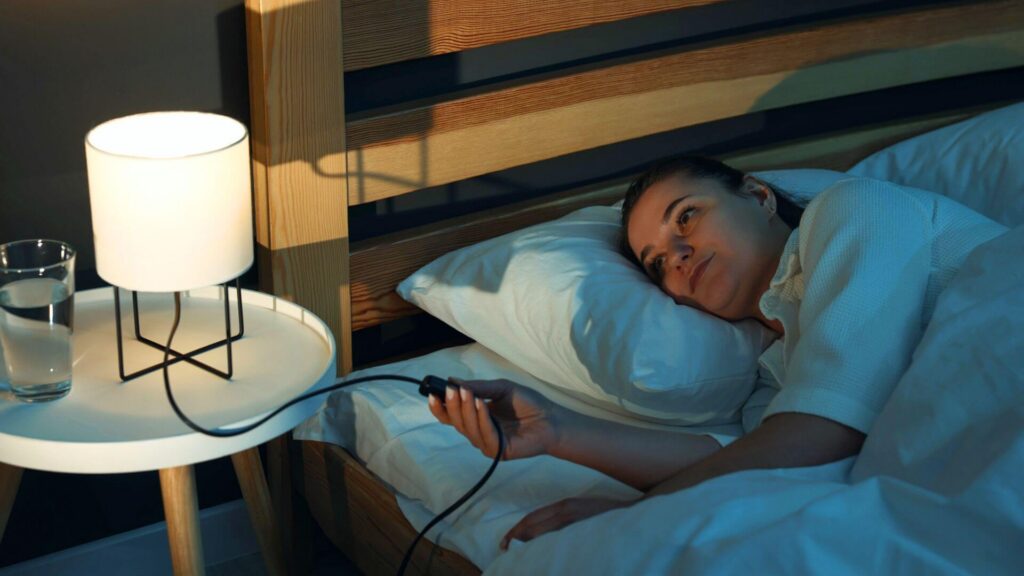
So let’s pull all of this information together and clarify the techniques that have been shown to improve sleep by addressing the underlying cellular mechanisms of circadian processes.
Reduce exposure to bright light, including blue light. Avoid LED lights that may be overhead in an office, for example; avoid television, computer and phone screens an hour or so before bed. Consider turning off the lights earlier in the night. Also consider how much time and when you use the bathroom before beginning your pre-bed ritual. Blue light is amplified in a bathroom setting, where we typically spend time before going to bed. And yes, this may sound a little off or obtuse here but you might try doing everything without the lights on in the bathroom – this can help considerably before you go to bed.
Studies indicate that reducing sensory load—managing light, sound, and tactile input—significantly improves sleep quality, particularly for individuals with sensory hypersensitivity, such as those with ASD, ADHD, or high stress. Effective, research-backed strategies include using dimmed lighting, weighted blankets, calming scents, and minimizing noise to facilitate a faster transition to sleep.
The trend that’s been called “dark showering” also has merit. Taking a warm shower before bed has been shown to help with sleep. It doesn't need to be longer than ten minutes, but it has been shown to help effect the amount of melatonin that's produced and the length of time that the melatonin is produced overnight. Also, as I mention above, the warmth positively affects the autonomic and thermoregulatory pathways that help induce sleep.
Keep in mind, too, that supplementing with melatonin can help induce sleep onset, which can help restore healthy sleep patterns, especially in conjunction with other strategies. However, recent studies have shown a link between long-term melatonin use and heart disease.
A combination of reduced light at night, showering to control passive heating and parasympathetic activation, and reducing the sensory load can all make a difference. More importantly, they all work on supporting the “mitochondrial repair window,” which regulates oxidative phosphorylation, NAD+ cycling, autophagy timing, and immune trafficking. Together these upstream cellular pathways are very important aspects of the circadian rhythm regulation that all rest on protecting this mitochondrial repair window.
I do have a caveat: we do need larger randomized controlled studies to look at all of these things together comparing dark and bright light with showering, etc. So while these light suppression studies and thermal sleep studies give us a better understanding of autonomic physiology and present us with good theoretical and preclinical evidence-based recommendations that seem to be working well, we do need to keep in mind the need for further research.
And yet, I do recommend these techniques as core steps before thinking about integrating peptides, supplements, and probiotics into the mix. Again, it’s important to involve your patients in this general discussion in the larger context of helping them set up a consistent routine that begins in the morning by exposure to bright light, especially sunlight, and establishing a consistent bedtime. Drive home this message about how light affects our sleep patterns at a biological level, but also remind them that these techniques will not work right away, especially for people who suffer from chronic sleep disruption of their sleep, extreme circadian dysregulation, and/or mitochondrial dysfunction.
So from the cellular medicine standpoint, sleep biology responds to light, temperature, redox state, and autonomic tone, and if we align all of these gradients we're going to help patients restore circadian coherence. And what's that lead to? Again, mitochondrial efficiency.
References
Haghayegh, S., Khoshnevis, S., Smolensky, M. H., Diller, K. R., & Castriotta, R. J. (2019). Before-bedtime passive body heating by warm shower or bath to improve sleep: A systematic review and meta-analysis. Sleep medicine reviews, 46, 124–135. https://doi.org/10.1016/j.smrv.2019.04.008
Martins, V., Allen, M.S., Borges, U., Laterza, P., Jackovič, M., Mosley, E., Javelle F., Laborde, S. (2025). Effects of light exposure on vagally-mediated heart rate variability: A systematic review, Neuroscience & Biobehavioral Reviews, 176, 0149-7634. https://doi.org/10.1016/j.neubiorev.2025.106241.
Gooley, J. J., Chamberlain, K., Smith, K. A., Khalsa, S. B., Rajaratnam, S. M., Van Reen, E., Zeitzer, J. M., Czeisler, C. A., & Lockley, S. W. (2011). Exposure to room light before bedtime suppresses melatonin onset and shortens melatonin duration in humans. The Journal of clinical endocrinology and metabolism, 96(3), E463–E472. https://doi.org/10.1210/jc.2010-2098