

In this research article, I return to the subject of my first-ever Journal Club (Ep. 017), in which I discussed a 2023 research study entitled, “Naturally derived cytokine peptides limit virus replication and severe disease during influenza A virus infection” (2023) that examined a specific growth hormone-derived peptide to address the underlying immunological mechanisms of post-viral infections. In the wake of COVID-19, a group of researchers looked at LAT-8881 (aka AOD 9064) to understand more about its potential to treat not only COVID-19 but also prepare us for another influenza A virus (IAV) pandemic.
Considering the global impact of COVID-19, in which we saw over 600 million people infected and close to 6-7 million people die, it’s important that we are confident in our treatment options. Further, as cellular medicine has evolved, providers are – and should be – more demanding: they want more options and opportunities to think outside of the box when it comes to treatment. Given what we now know about the limitations of antiviral medicines and drug resistant viral strains, I think we can all benefit from keeping this peptide in mind, as there definitely is a need for more immunotherapies that are focused on modulating the immune system in favor of the host and reducing hyper inflammation, especially in the lungs, and controlling that macrophage activation and the tissue damage that occurs – all of which we saw occur through COVID-19.
From a cellular medicine perspective, this study uncovered an important nuance to a peptide that has been shown to be safe and effective. The nuance I am referring to is related to the properties and mechanisms related to LanCL1 and 2 proteins (Lanthionine synthetase C-like proteins 1 and 2). These proteins function as receptors for abscisic acid (ABA) and are critical regulators of metabolism, mitochondrial function, and antioxidant defense. They are highly expressed in the brain, skeletal muscle, and adipose tissue, where they stimulate glucose uptake, mitochondrial respiration, and protect against cellular stress.
With that in mind, I’ve also referenced an additional research study entitled “Developmental and Activity-Dependent Expression of LanCL1 Confers Antioxidant Activity Required for Neuronal Survival,” which dates back to 2014 and identifies the importance of LanCL 1 and 2 protei in the protection of neuronal cells against oxidative stress. Together, these two studies suggest that we consider the potential of the peptide LAT-881 (AOD-9064) because of its demonstrated ability to reduce viral replication, address viral inflammatory changes, improve recovery, and offer future protection used prophylactically. This mechanism stems from its ability to reduce the polarized macrophage cytokines, chemokines, and proteases that accompany viral infection and have a significant effect on the alveolar tissue, thereby reducing the transcription of those factors secondary to a response to the viral infection.
LAT-8881 and AOD-9064
These peptides refer to the same 16-amino acid fragment derived from the C-terminus of Human Growth Hormone (hGH). While "AOD-9604" is the more common name used in fitness and regenerative medicine circles, "LAT-8881" is the clinical designation used by pharmaceutical developers (specifically Lateral Pharma) for investigating its effects on pain and inflammation.
The Study
In the 2023 study, the researchers found that LAT8881 promoted cell viability and protected stressed cells from death in vitro via a mechanism that involves either LanCL 1 or LanCL 2. Specifically, the researchers administered intranasal LAT8881 (or its metabolite, LAT9991F) into IAV infected mice and found a correlation with reduced viral loads and pro-inflammatory cytokines in the lung, as well as evidence of reduced pulmonary injury. Further, with such LAT8881 treatment came an increase in alveolar macrophages (AM), which are the primary defenders of the airways and a key target for infection by IAV. [NOTE: In contrast, LAT7771 derived from the C-terminus of the related prolactin protein had limited activity in vivo.] Ultimately, the researchers also showed that administration of LAT 8881 curtailed the severity of infection, specifically when it was co-administered with oseltamivir phosphate (OP), an approved influenza antiviral.
In essence, the researchers were able to demonstrate a reduction in viral replication, which also reduced inflammation, and created a protective immune response that was seen in the preclinical models that they had set up. In order to confirm that the observed changes in IAV-infected mice treated with LAT8881 were indeed the result of the localized administration of the compound, the researchers applied different doses of LAT8881 on lung infectious viral loads, as well as the inflammatory cytokines and immune cells. Not surprisingly, the effects were most marked with the highest doses.
The key take-away here is how this peptide improved survival, reduced viral replication, and reduced the local inflammation that can lead to tissue damage. Although this study focused on influenza A virus infections, I think it points to the importance of targeting viral replication and the underlying mechanisms involved, specifically those related to the mechanisms of action of LanCL 1 and 2 proteins associated with decreasing the pro inflammatory response of the cytokines that are secondary to viral replication. It’s also significant that administration of the peptide increased a protective aspect of these alveolar macrophages that typically can phase change or can be aggressive toward immune cells.
Of note, the researchers also looked at LAD-8881 by itself and in combination with an approved influenza antiviral; the combination led to more pronounced reductions in the markers of disease severity with treatment of either compound, but more enhanced when combined with the antiviral.
Again, it’s important to recognize the very favorable safety profile of LAT-8881 (and AOD-9064); it's been demonstrated effective not just in preclinical evaluations but has been used for a long time with an excellent track record. AOD9064 has been used with hyaluronic acid – a combination that has yielded excellent clinical results, reducing cartilage degradation, decreasing synovial inflammation, accelerating repair, and preserving joint function – these being the goals in improving osteoarthritic changes or inflammatory issues secondary osteoarthritis in knee joints. Also, the results related to different dosing amounts point to an opportunity to consider using higher dosing of AOD-9064 as an intranasal beyond its anti-viral application. Further, the synergy of using a combination therapy showed even better results with reducing viral loads, improving inflammatory changes, and reducing lung damage. The researchers showed changes within three days of treatment of these initial infections, significant reduction in viral loads, improving the inflammatory cytokines like interleukin-six, tumor necrosis factor alpha, monocyte, chemotactic proteins, and reduction in lung damage.
Together, these results suggest that we can benefit from considering LAT-8881 (AOD-9604) as a prophylaxis or in acute treatment regimens.
Understanding the Role and Significance of LanCL 1 and 2 Proteins
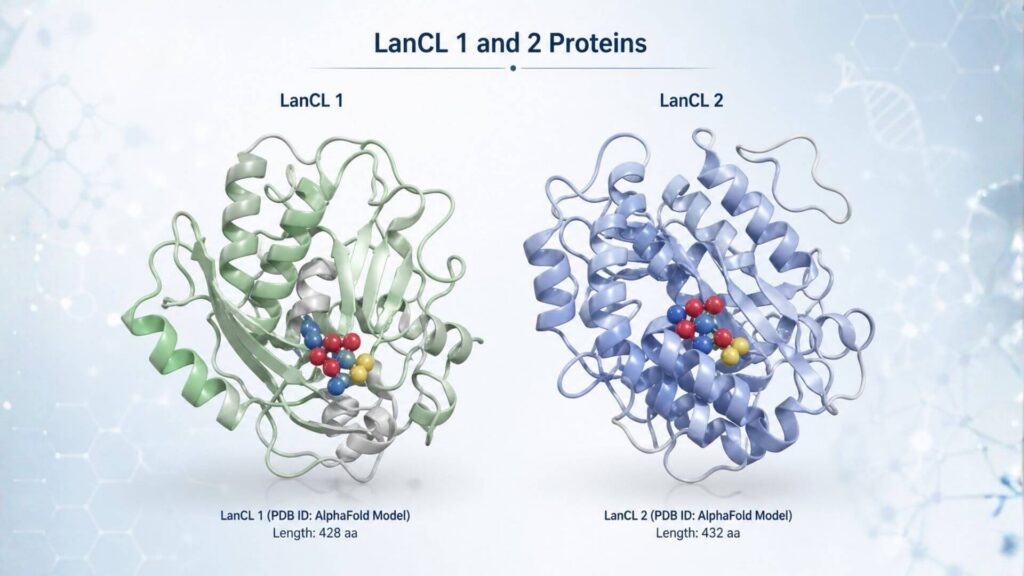
To truly appreciate the mechanistic properties of LAT-8881/AOD-9064, it’s valuable to look more closely at LanCL 1 and 2 proteins, which are at the heart of the earlier 2014 paper I reference above. The researchers show how LAT-8881/AOD-9064 produce an antioxidant effect and improvement of neuronal survival. Indeed, it’s significant that these proteins not only support the lungs (during viral infection) but also potentially the brain.
The authors of the paper refer to LanCL 1 as “the antioxidant gene” whose expression is developmentally regulated and induced by neuronal activity, neurotrophic factors implicated in neuronal plasticity and survival, and oxidative stress. Further, they point out that genetic deletion of LanCL1 causes enhanced accumulation of ROS in brain, as well as development-related lipid, protein, and DNA damage; mitochondrial dysfunction; and apoptotic neurodegeneration. Their study was intended to show how LanCL1 transgene protects neurons from ROS.
When oxidative stress becomes an issue, LanCL 1 and 2 assist the mitochondria in handling the oxidative stress better, whether it's due to hypoxic stress, as is the case with neuronal survival, or other areas of insult. In either situation, the antioxidant defense can be correlated to the ability of LanCL 1 proteins to improve the formation of thioester products, which are similar to glutathione. Specifically, LanCL 1 proteins enhance the PI3KAKT pathway and not only work in improving oxidative stress, but also enhancing mitochondrial number and improving the proton motive force, thereby improving respiration and maintaining an energy balance that's necessary during oxidative stress. So consider the situation: you've got antioxidant defenses working, and at the same time you've got improved mitochondrial function under stress. I think that's very impressive where we have a peptide that can support antioxidant defense, enhance metabolism, and promote cell survival.
The ability of LanCL 1 to enhance and promote cell survival is tied to the phosphorylation of AKT, a key signaling protein and that phosphorylation is a critical component in the PI3K AKT pathway of the cell more focused on cell survival, and reducing the potential of apoptosis, and thereby improving the stress resistance of the cell.
The authors of this paper found that an increased expression of these LanCL proteins can delay or slow down the onset of neurodegenerative issues, and when used in combination with other chemotherapeutic drugs can further improve mitochondrial function and stress resistance.
This abundance of LanCL proteins improves the proton gradient and the proton motive force under stress, which is going to improve respiration. Typically under oxidative stress, due to hypoxia or whatever, the proton motive force slows down or alters, affecting the cell signaling aspects of the mitochondria – in particular, improving ATP, NAD, initiating an increase in AMPK, PGC one alpha, TFAM, nuclear respiratory factor two that improves antioxidant production. All these processes are influenced by this proton motive force under stress. This peptide has the effect of increasing the expression of the LanCL 2 protein during times of stress in order to maintain cell energy levels. Which brings us back to a key principle of cellular medicine: how to support cell efficiency and metabolic flexibility during times of stress.
In this way, it’s beneficial to understand and appreciate the important roles that LanCL 1 and 2 proteins play in cellular metabolism, antioxidant defenses, and the pathway of endothelial nitric oxide. The authors conclude that LanCL1 and LanCL2 being prominently expressed in the brain can “provide precedent that antioxidant mechanisms can be cell-type specific.” Further, “selective expression in neurons may be understood to result from the special demands of neurons for protection from ROS.” Their ultimate conclusion is that “ the LanCL family will be important to integrate into understandings of synaptic physiology, stress response, and the selective vulnerability of neurons in aging and neurodegenerative diseases.”
Returning to Viral Infections and a Future of Additional Pandemics
Assuming a wider lens here, I believe that in considering treatment options for epidemic-style viral infections, we should focus on improving cell response and naturally reducing the viral load, inflammatory changes, and the overall tissue inflammation – all of which are related to ROS overproduction and oxidative stress. The two studies cited here point to the wide-ranging and nuanced potential for peptides such as AOD9064 to address this underlying oxidative stress through its antioxidant effects – whether that be to target viral infection or a potential neurodegenerative condition.
Further, I think it’s imperative that we consider additional choices as healthcare providers in making better informed and smarter decisions.
References:
Harpur, C.M., West, A.C., Le Page, M.A., Lam, M., Hodges, C., Oseghale, O., Gearing, A.J. and Tate, M.D. (2023), Naturally derived cytokine peptides limit virus replication and severe disease during influenza A virus infection. Clin Transl Immunol, 12: e1443. https://doi.org/10.1002/cti2.1443
Huang, Chao, et al. (2014). Developmental and Activity-Dependent Expression of LanCL1 Confers Antioxidant Activity Required for Neuronal Survival. Developmental Cell, Volume 30, Issue 4, 479 - 487. https://www.cell.com/developmental-cell/fulltext/S1534-5807(14)00400-6