
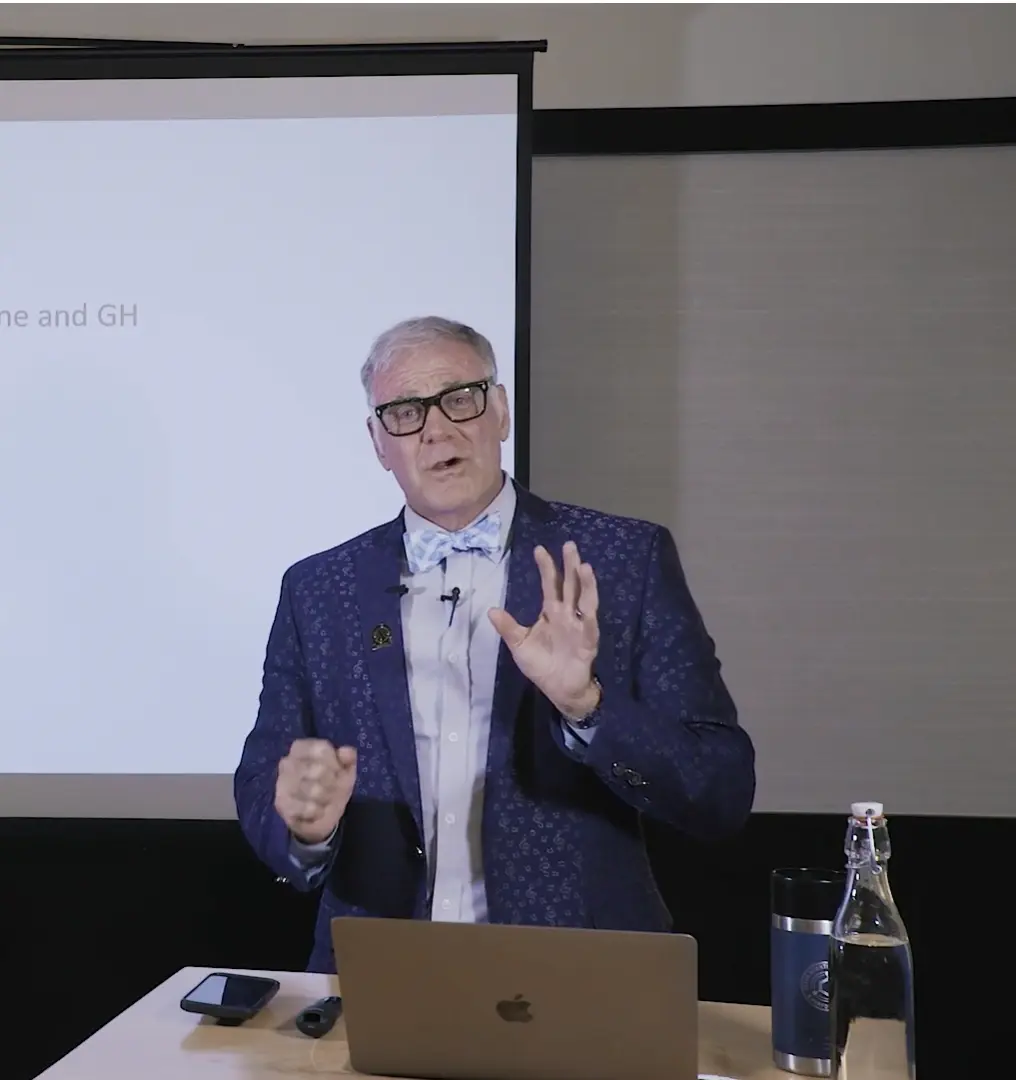
Hormone therapy foundations for clearer metabolic context and safer, more individualized clinical interpretation
For clinicians building mechanistic clarity for everyday decisions
This course teaches a mechanistic framework for thinking about hormone therapy through cellular energy production, metabolic flexibility, and oxidative stress (cellular redox), rather than focusing on hormone replacement alone. You will connect growth hormone (GH) and insulin-like growth factor 1 (IGF-1) physiology with sex-steroid signaling, skeletal muscle remodeling, and cross-tissue metabolism in contexts such as aging, insulin resistance, and menopause. The curriculum also reviews common areas of uncertainty, including how “low testosterone” is defined (lab thresholds versus symptom-plus-biochemistry) and how cardiovascular risk debates are discussed in the literature. Along the way, it highlights practical interpretation issues such as GH pulsatility, isoform complexity, and differences between common assay methods. The aim is to support clearer clinical reasoning when integrating symptoms, labs, and physiology, with an approach that can be monitored over time and adjusted based on patient response and measurable endpoints. It is designed for clinicians and healthcare providers, with additional relevance for researchers and advanced trainees who want a stronger cellular-level foundation for endocrine-metabolic discussions.
What's Included
The course is organized as a structured, multi-lesson curriculum that progresses from core concepts and clinical controversies into deeper endocrine–metabolic physiology and integrative applications. Teaching combines lecture-based instruction with selected practical demonstrations to connect mechanisms to real-world clinical interpretation.
- Over 5 hours of video content
- 1 module
- 19 video lessons
- Downloadable learning guides
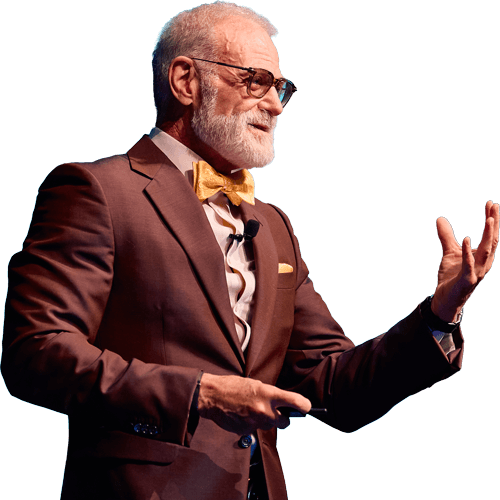
William Seeds, MD
Before establishing the SSRP Institute, Dr. Seeds served as a board-certified orthopedic surgeon and sports medicine specialist for nearly three decades, including Chief of Surgery, Orthopedic Residency Site Director, and Director of The Ohio Bone & Joint Institute for University Hospitals.
His significant contributions to sports medicine have been recognized at the NFL Hall of Fame. He has consulted for athletes across all major sports leagues, including the NFL, NHL, MLB, NBA, and even the performers on “Dancing with the Stars.”
Through his research at the SSRP Institute, Dr. Seeds continues to explore the cellular pathways and mechanisms that positively impact disease and dysfunction in the body as well as optimize physical performance.

Questions? Our Provider Care Team is here to help.
We'd love to help you determine the best next steps on your Cellular Medicine journey.