
After a recent Journal Club episode in which I featured, The Renin–Angiotensin–Aldosterone System (RAAS): Beyond Cardiovascular Regulation, I wanted to return to the article and expand a bit on the significance of the Renin–Angiotensin–Aldosterone System (RAAS). As we know, the RAAS system has traditionally been viewed as the body’s primary mechanism for regulating blood pressure, fluid balance, and cardiovascular function. Indeed, most clinicians associate RAAS with hypertension, heart failure, kidney disease, and the use of ACE inhibitors or angiotensin receptor blockers (ARBs). However, the authors of the article challenge this narrow perspective and presents RAAS as a far-reaching biological signaling network that influences nearly every organ system in the body. As I mention in the Journal Club discussion, I agree with this point and went a bit further to emphasize the point that RAAS is fundamentally a cell-signaling system with important implications for inflammation, mitochondrial health, fibrosis, tissue remodeling, and even aesthetic medicine.
The Gist of the Article
The article provides a comprehensive overview of both the classical and alternative RAAS pathways. The classical pathway begins with renin, which converts angiotensinogen into angiotensin I. Angiotensin-converting enzyme (ACE) then converts angiotensin I into angiotensin II (Ang II), one of the most biologically active molecules in the system. Ang II primarily exerts its effects through the angiotensin type 1 receptor (AT1R).
Activation of the ACE/Ang II/AT1R pathway produces effects that are necessary for short-term survival but can become harmful when chronically activated. These effects include vasoconstriction, sodium retention, aldosterone release, oxidative stress, inflammation, fibrosis, cellular proliferation, and tissue remodeling. While these mechanisms help maintain blood pressure during stress or injury, excessive activation contributes to hypertension, cardiovascular disease, chronic kidney disease, metabolic dysfunction, and organ damage.
Importantly, the authors contrast this pathway with the protective arm of RAAS. In this alternative pathway, ACE2 converts Ang II into angiotensin-(1–7), which binds to the Mas receptor. This ACE2/Ang-(1–7)/Mas receptor axis produces effects that oppose many of the actions of Ang II. Instead of vasoconstriction and inflammation, it promotes vasodilation, anti-inflammatory signaling, antioxidant activity, tissue repair, and antifibrotic effects. Rightly so, the authors are bringing our attention to the importance of maintaining a balance between these two systems. Disease frequently occurs when the ACE/Ang II/AT1R pathway dominates while the protective ACE2/Ang-(1–7)/Mas pathway becomes insufficient.
RAAS as a Local Tissue Signaling System
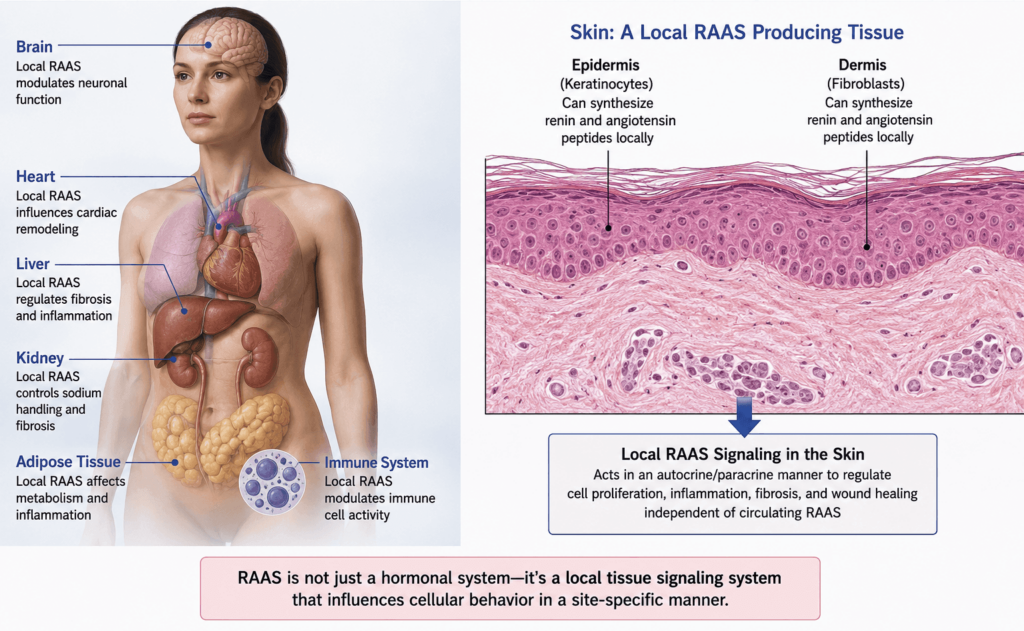
From the point of view of cellular medicine, it’s crucial that we recognize that RAAS does not operate solely as a circulating hormonal system. Despite researchers having identified local tissue-specific RAAS systems in the heart, kidneys, liver, brain, adipose tissue, immune system, and skin, many clinicians still think of RAAS exclusively in terms of blood pressure regulation. However, individual tissues are capable of producing their own RAAS components. For example, skin fibroblasts and keratinocytes can synthesize renin and angiotensin peptides locally. This means that RAAS signaling occurs directly within tissues and can influence cellular behavior independent of circulating blood levels.
The significance of this discovery is profound. It suggests that RAAS is not merely a cardiovascular regulatory system but rather a universal signaling mechanism involved in tissue maintenance, injury response, and cellular adaptation throughout the body. Specifically, angiotensin II is one of the most influential signaling molecules in human physiology. While Ang II is essential for maintaining blood pressure and fluid balance, excessive activation has numerous pathological consequences.
Ang II binds primarily to the AT1 receptor and activates multiple intracellular pathways associated with inflammation and tissue damage. These pathways stimulate reactive oxygen species production, activate inflammatory transcription factors, promote fibrosis, and encourage cellular proliferation. The result is progressive tissue remodeling and dysfunction.
As the paper suggests, it’s important that we reconceive Ang II not simply as a vascular hormone but as a cytokine-like signaling molecule capable of influencing immune responses, metabolism, organ fibrosis, and cancer biology. Indeed, Ang II signaling has been implicated in cardiovascular disease, chronic kidney disease, liver fibrosis, autoimmune disorders, insulin resistance, neurodegeneration, and tumor progression.
This broader perspective expands our understanding of Ang II from a blood-pressure mediator to a master regulator of inflammatory and metabolic signaling.
Mitochondria and Oxidative Stress: A Key Consideration
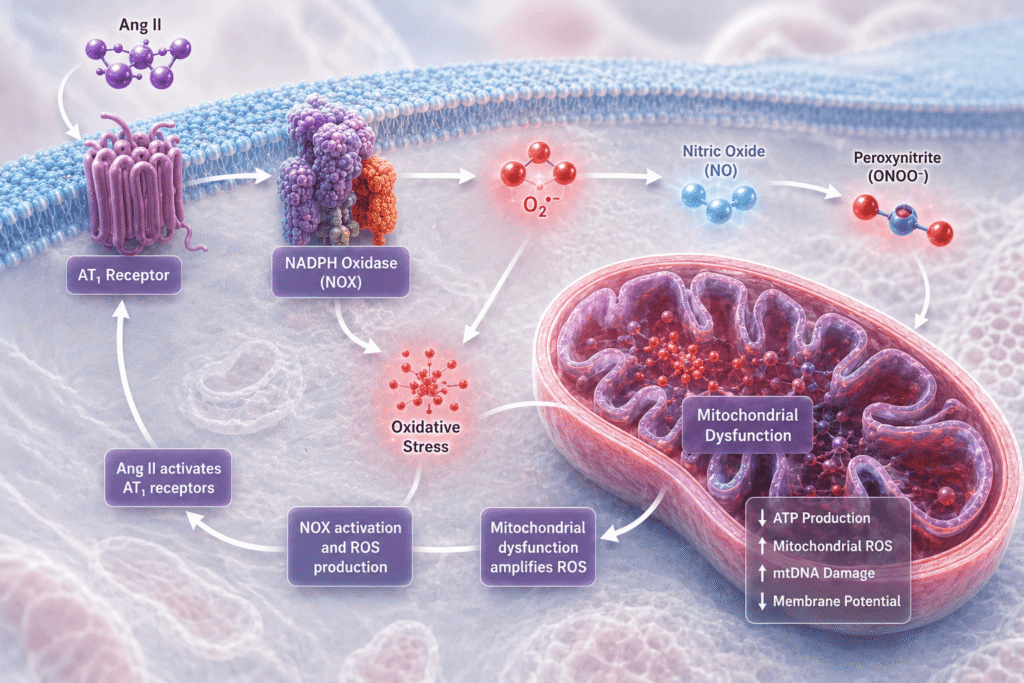
Although the authors discuss a wide range of biological mechanisms, I want to draw our attention to the role of mitochondrial signaling, in particular. Ang II activation of the AT1 receptor initiates a destructive cycle involving NADPH oxidase (NOX), reactive oxygen species (ROS), and mitochondrial dysfunction. This creates a “RAAS-NOX-mitochondrial loop” in which Ang II activates AT1 receptors, stimulating NADPH oxidase activity. In turn, this reaction leads to superoxide production, depletion of nitric oxide, formation of peroxynitrite, and progressive mitochondrial dysfunction.
Why is this so significant? Damaged mitochondria generate additional reactive oxygen species, which further stimulate inflammatory signaling and perpetuate oxidative stress. The cycle becomes self-reinforcing, contributing to chronic inflammation, impaired cellular energy production, tissue aging, and disease progression. Understanding this signaling loop is essential because it helps explain why chronic RAAS activation affects so many different tissues. Whether in cardiovascular disease, skin aging, metabolic dysfunction, or organ fibrosis, the same underlying mechanisms of oxidative stress and mitochondrial injury are often present.
From a cellular medicine perspective, this may be one of the most important implications of RAAS biology. It links hormonal signaling directly to mitochondrial health, redox balance, and long-term tissue function.
Evidence for Protective RAAS Signaling
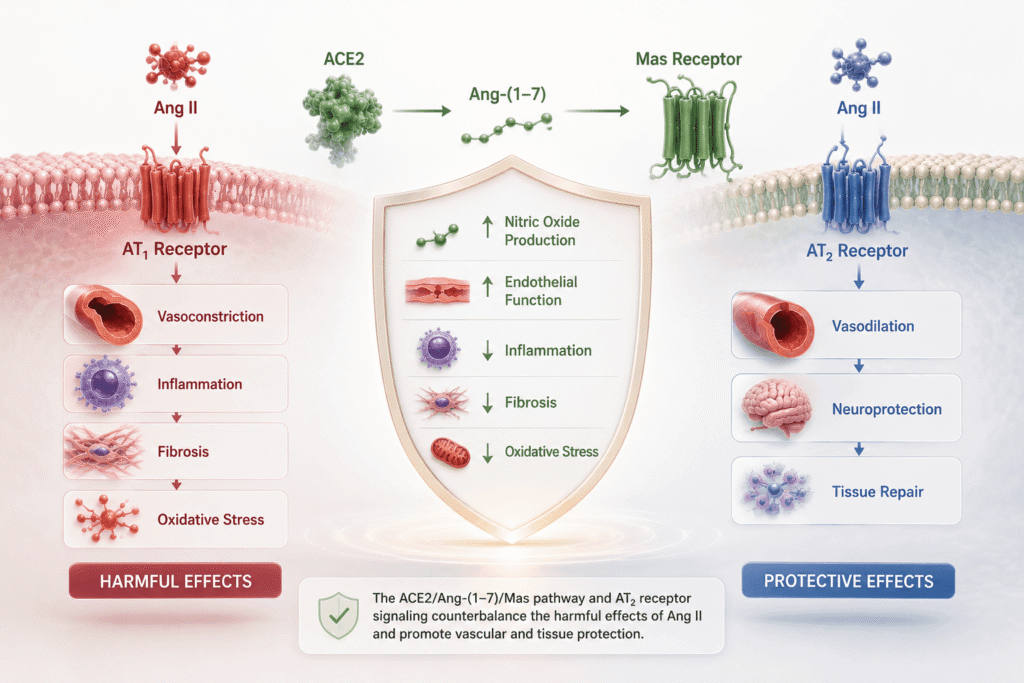
A major strength of this article is the authors’ emphasis on the protective arm of RAAS. The ACE2/Ang-(1–7)/Mas receptor pathway serves as a physiological counterbalance to the harmful effects of excessive Ang II signaling. Activation of this pathway promotes nitric oxide production, improves endothelial function, reduces inflammation, limits fibrosis, and protects against oxidative stress. The review also highlights the protective role of the AT2 receptor, which opposes many AT1 receptor actions and contributes to vasodilation, neuroprotection, and tissue repair.
Importantly, many of the clinical benefits observed with ACE inhibitors and ARBs may arise not only from reducing Ang II activity but also from shifting the balance toward these protective pathways. The emerging therapeutic goal is therefore not simply to suppress RAAS activity but to selectively inhibit harmful signaling while enhancing protective signaling. This represents a more sophisticated understanding of RAAS biology and offers opportunities for future drug development.
The Clinical Evidence of RAAS
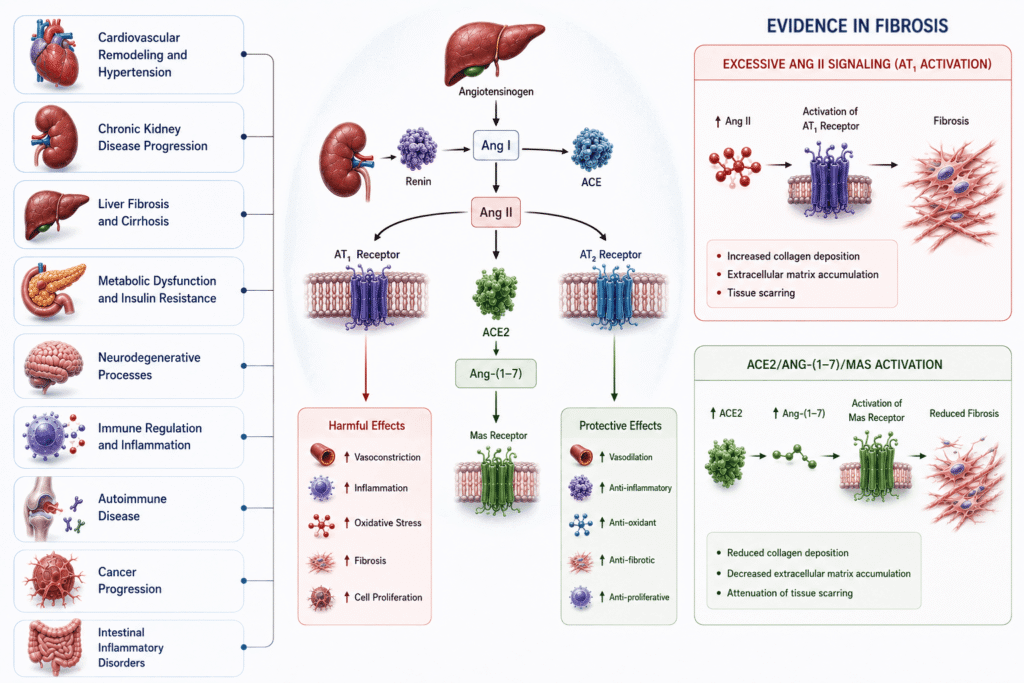
The authors of the study share convincing evidence that RAAS participates in Cardiovascular remodeling and hypertension, as well as
- Chronic kidney disease progression
- Liver fibrosis and cirrhosis
- Metabolic dysfunction and insulin resistance
- Neurodegenerative processes
- Immune regulation and inflammation
- Autoimmune disease
- Cancer progression
- Intestinal inflammatory disorders
Particularly compelling is the evidence supporting RAAS involvement in fibrosis. Excessive Ang II signaling promotes collagen deposition, extracellular matrix accumulation, and tissue scarring. Conversely, activation of ACE2 and Ang-(1–7) appears to reduce fibrosis in experimental models.
The article also highlights emerging evidence linking RAAS dysfunction to inflammatory bowel disease and chronic inflammatory enteropathies in dogs, illustrating the broad applicability of these mechanisms across species.
Collectively, these findings suggest that RAAS represents a common biological pathway underlying many chronic diseases. This makes it an attractive therapeutic target and explains why RAAS-modulating drugs have shown benefits that extend beyond blood pressure control.
My Suggested Take-Homes
RAAS is a fundamental cell-signaling network that influences virtually every tissue in the body. With this in mind, I encourage you to move beyond the conventional view of RAAS as a cardiovascular system. Keep in mind that local tissue production of RAAS components occurs throughout the body and that Ang II signaling affects inflammation, oxidative stress, mitochondrial function, and cellular health.
Rather than focusing exclusively on blood pressure, I encourage you to view RAAS through the lens of cellular signaling and to keep in mind that excessive AT1 receptor activation drives oxidative stress, inflammation, and mitochondrial dysfunction, while alternative RAAS pathways provide protective and restorative effects. This framework also helps to explain why RAAS appears repeatedly in discussions of aging, chronic disease, metabolic dysfunction, fibrosis, and regenerative medicine.
As research continues to uncover the complexity of RAAS signaling, therapies that selectively suppress harmful pathways while enhancing protective ones may become increasingly important in the treatment of cardiovascular, metabolic, inflammatory, fibrotic, and age-related diseases.
References:
Valentini, A., Heilmann, R. M., Kühne, A., Biagini, L., De Bellis, D., & Rossi, G. (2025). The Renin–Angiotensin–Aldosterone System (RAAS): Beyond Cardiovascular Regulation. Veterinary Sciences, 12(8), 777. https://doi.org/10.3390/vetsci12080777