
Peptide Therapy Foundations: Neuroprotection
Course Details
This course examines the peptides studied for their effects on the brain: the regulatory peptides, neurotrophic preparations, and growth-factor analogs explored for cognition, mood, and neural resilience. It is written for clinicians who want a grounded understanding of how each agent is thought to act, what the evidence shows, and how cautiously each should be read given the state of the research.
The lessons span several mechanistic families. Selank and Semax are short regulatory peptides with effects on neurotransmitter and neurotrophic signaling. Cerebrolysin and Cortexin are neurotrophic preparations studied in neurological recovery. Dihexa, P21, PE22-28, VIP, and IGF-1 LR3 each engage distinct pathways, from growth-factor signaling to synaptogenesis. The maturity of the evidence varies widely across the group, and the lessons say so plainly.
Each lesson follows the same clinical lens: what the agent is, how it works, what the evidence shows, and what a practitioner weighs before applying it. Together they map the neuroprotective peptides as a group so you can reason about any single agent against the others, and against the limits of the data.
SSRP FACULTY
William Seeds, MD
William Seeds, MD
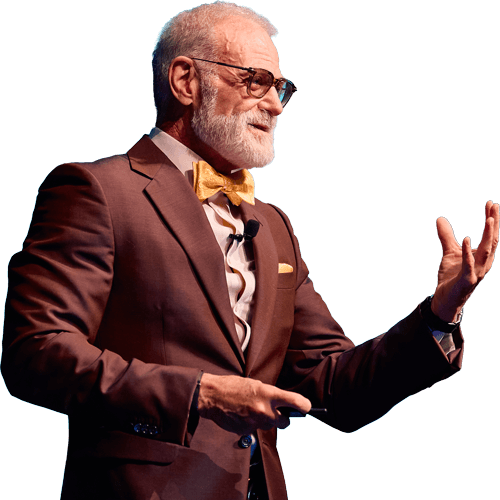
William Seeds, MD
Before establishing the SSRP Institute, Dr. Seeds served as a board-certified orthopedic surgeon and sports medicine specialist for nearly three decades, including Chief of Surgery, Orthopedic Residency Site Director, and Director of The Ohio Bone & Joint Institute for University Hospitals.
His significant contributions to sports medicine have been recognized at the NFL Hall of Fame. He has consulted for athletes across all major sports leagues, including the NFL, NHL, MLB, NBA, and even the performers on “Dancing with the Stars.”
Through his research at the SSRP Institute, Dr. Seeds continues to explore the cellular pathways and mechanisms that positively impact disease and dysfunction in the body as well as optimize physical performance.
Cerebrolysin
In-ProgressLesson Resources
Overview
Cerebrolysin is a porcine brain-derived peptide hydrolysate, standardized by Ever Pharma through controlled enzymatic hydrolysis of lipid-free porcine brain proteins. Mass spectrometry has identified more than 638 unique peptides, with roughly 85 percent free amino acids and about 15 percent biologically active peptide fractions. It is not FDA approved in the United States and is investigational only here, though it is approved in over 40 countries, including Austria, Germany, Russia, China, and South Korea, for acute ischemic stroke, dementia, and traumatic brain injury.
A central concept Dr. Seeds emphasizes is that the preparation contains no intact growth factor fragments. There are no detectable intact nerve growth factor, BDNF, glial-derived, or ciliary neurotrophic factor fragments. Instead, the mixture exerts neurotrophic-like activity collectively. He frames it as an orchestra of peptides working together, not a single isolated factor, which is why generic alternatives may not reproduce the same biological activity.
Mechanisms reported in preclinical work
The proposed mechanisms span several pathways, most documented in animal or in vitro models:
- Neurotrophic signaling: shifts the pro-NGF to NGF balance toward more mature, biologically active NGF, with effects on TrkA and p75NTR receptors and cholinergic neurotransmission.
- Anti-apoptotic protection: upregulation of BCL2, downregulation of Bax, and reduced caspase-3.
- Anti-inflammatory activity: downregulation of toll-like receptors 2 and 4 and reduced microglial activation in TBI models.
- Synaptic plasticity: enhanced LRRTM4 synaptogenic protein in hippocampal synapses, linked to learning and memory.
- Antioxidant capacity: upregulated superoxide dismutase and glutathione peroxidase, with the Nrf2 pathway still unconfirmed.
Clinical evidence and its limits
The clinical picture is mixed. The CASTA stroke trial showed neutral primary endpoints, with a post hoc severe-stroke subgroup trending toward benefit and lower mortality. Alzheimer’s studies reported cognitive benefit at IV doses, and human biomarker work showed reductions in extracellular-vesicle total tau. The CAPTAIN series suggested improvement in moderate to severe TBI. Dr. Seeds also notes a 2025 retraction of a tau model and Cochrane concerns about industry bias, since most multicenter studies were funded by Ever Pharma. No phase one pharmacokinetic or pharmacodynamic studies exist, and there are no head-to-head comparisons against modern standards such as thrombectomy or anti-amyloid antibodies.
Reported use is IV infusion only, diluted in 100 mL of normal saline over 60 to 90 minutes. Doses in the literature range from 10 to 50 mL depending on indication, with most prescribed dosing around 10 mL.
Key clinical points
- Cerebrolysin is a standardized porcine peptide mixture; its activity arises from the combined fractions, not any single growth factor.
- International approvals cover acute ischemic stroke, dementia, and TBI; it remains investigational in the United States.
- Mechanistic evidence for neurotrophic, anti-apoptotic, anti-inflammatory, and synaptic effects is largely preclinical, with some human biomarker support.
- Clinical results are discordant, no phase one PK/PD data exist, and industry funding raises bias questions.
- Caution is warranted with seizure disorders, renal impairment, porcine allergy, and pregnancy; monitor vitals, renal function, and EEG where seizure history is present.

Questions? Our Provider Care Team is here to help.
We'd love to help you determine the best next steps on your Cellular Medicine journey.
Continue your learning journey
VIEW ALLAging-Associated Decline of Phosphatidylcholine Synthesis is a Malleable Trigger of Natural Mitochondrial Aging
Dr. Seeds explores how age-related decline in phosphatidylcholine synthesis may contribute to mitochondrial aging and why that matters in Cellular Medicine. This discussion connects membrane integrity, mitochondrial function, methylation, and metabolic resilience, while highlighting how this pathway may be more modifiable than we once thought.
1. Managing shingles outbreaks in GLP-1 patient through peptides (0:40)
2. Peptide strategies in suspected ALS (15:56)
3. Improving durability in dementia treatment (25:08)
In this bonus episode from the MM15 Virtual Summit, Dr. Seeds addresses an important question around the use of GLP-1s for metabolic balancing in patients who do not need to lose weight. He shares his perspective on what may be considered microdosing, along with the clinical thought process he uses when determining appropriate dosing in these more nuanced cases.
Additional questions from the MM15 Virtual Summit can be found in our accompanying article here: [insert article link]
Access the full MM15 Course here: Mastermind 15 on Aesthetics
The Limits of Alternative Peptide Delivery
Dr. Seeds reviews oral, sublingual, and transdermal peptide delivery, and explains why subcutaneous injection remains the gold standard for most peptides. (Question Link)
A Deeper Look at the RAAS System
Dr. Seeds uses this Rabbit Holes episode to build on Journal Club Episode 87, revisiting the renin-angiotensin-aldosterone system and its broader role in cellular signaling. The discussion focuses on receptor balance, local tissue effects, and the mechanisms linking RAS disruption to inflammation, fibrosis, and mitochondrial stress.(Article Link)
The Renin–Angiotensin–Aldosterone System (RAAS): Beyond Cardiovascular Regulation
Dr. Seeds unpacks how RAS receptor balance drives inflammation, fibrosis, mitochondrial dysfunction, and tissue remodeling, far beyond its classical role in blood pressure regulation. (Article Link)
1. SSRI tapering resistance, anxiety during weaning (0:40)
2. Progressive multifocal dystonia (13:27)
3. Complex type 2 diabetes case in a lean, athletic patient (28:32)