
Peptide Therapy Foundations: Immune Regulation
Course Details
This course examines the peptides that shape immune function: the thymic peptides that help regulate the maturation and balance of the immune response, and the host-defense peptides that act at the front line of innate immunity. It is written for clinicians who want to understand how these agents influence immune signaling and where each one fits in practice.
The lessons center on the thymic family. Thymalin, Thymosin Alpha-1, Thymosin Beta-4, and Thymulin each act on different aspects of immune regulation, from T-cell maturation and modulation to tissue repair and anti-inflammatory signaling. LL-37, a cathelicidin host-defense peptide, rounds out the picture with its role in innate antimicrobial defense and immune crosstalk.
Each lesson follows the same clinical lens: what the agent is, how it works, what the evidence shows, and what a practitioner weighs before applying it. Together they map the immune-regulating peptides as a group so you can reason about any single agent in the context of the others.
SSRP FACULTY
William Seeds, MD
William Seeds, MD
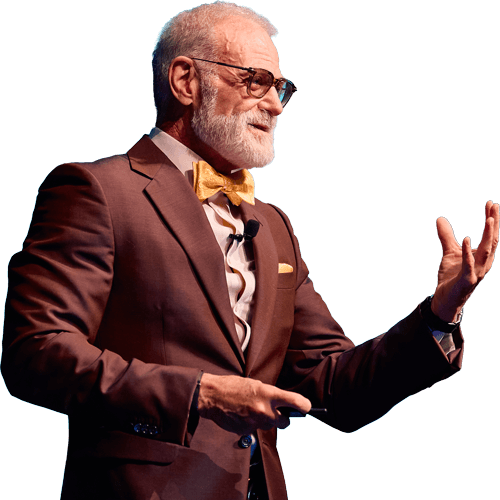
William Seeds, MD
Before establishing the SSRP Institute, Dr. Seeds served as a board-certified orthopedic surgeon and sports medicine specialist for nearly three decades, including Chief of Surgery, Orthopedic Residency Site Director, and Director of The Ohio Bone & Joint Institute for University Hospitals.
His significant contributions to sports medicine have been recognized at the NFL Hall of Fame. He has consulted for athletes across all major sports leagues, including the NFL, NHL, MLB, NBA, and even the performers on “Dancing with the Stars.”
Through his research at the SSRP Institute, Dr. Seeds continues to explore the cellular pathways and mechanisms that positively impact disease and dysfunction in the body as well as optimize physical performance.
Thymosin Beta-4
In-ProgressLesson Resources
Overview
Thymosin beta-4 is a 43-amino-acid endogenous actin-sequestering peptide encoded by the TMSB4X gene. This lesson works through its mechanisms, the available human evidence, and where it stands clinically and from a regulatory standpoint. The peptide carries emerging preclinical signals and Phase 2 human data across wound healing, cardiac repair, and ophthalmology, alongside ongoing Phase 3 work in neurotrophic keratopathy.
A practical caution sits up front: synthetic thymosin beta-4 is sold commercially under the name TB500, and the two are treated as functionally identical here. The peptide is not FDA approved, is prohibited by WADA, and has been removed from 503A and 503B compounding, so sourcing and quality vary widely.
How it works
The primary mechanism is sequestration of G-actin, where the peptide complexes with G-actin monomers and limits spontaneous polymerization into F-actin. Dr. Seeds offers the image of a tank tread: the G-actin monomers are continuously laid down so the track keeps moving forward, supporting cell migration and tissue repair. Through this central node, the peptide intersects multiple signaling cascades, including PI3K/AKT/eNOS, NF-kB inhibition, HIF-1 alpha stabilization, ErbB2/Raf1, TGF-beta/SMAD, Wnt/beta-catenin, Notch, and MAPK/ERK.
On the immune side, it blocks IkB phosphorylation and p65 nuclear translocation, suppressing NF-kB transcription and downstream cytokines such as TNF-alpha, IL-1 beta, IL-8, COX-2, and iNOS. Most of these pathway findings are in vitro, and there is no direct evidence for influence on AMPK, mTOR, NAD, sirtuins, NRF2, FOXO, JAK/STAT, hedgehog, or cyclic AMP/PKA.
What the human evidence supports
IV pharmacokinetics are well documented through Phase 1 and 2 trials: a half-life of roughly one to two hours, dose-proportional behavior, no accumulation after 10 to 14 days, and immunogenicity under one percent. The strongest clinical signals are topical, with reduced corneal staining and symptoms in dry eye and accelerated chronic wound healing in responders. A randomized IV trial in post-infarct patients showed subgroup changes but no overall significant difference.
Several things remain unconfirmed. There is no subcutaneous or oral PK data, no long-term safety beyond 14 days of IV use, and no formal drug interaction studies. The metabolite ACSDKP is degraded by ACE, so ACE inhibitors may elevate it, a point to note when these agents are used together. Because the peptide is proangiogenic, it may counteract anti-angiogenic therapy, and active malignancy is treated as a relative contraindication pending further evaluation.
Key clinical points
- Thymosin beta-4 sequesters G-actin as its core mechanism, sitting at the intersection of repair, anti-inflammatory, and angiogenic pathways, largely on in vitro evidence.
- It is not FDA approved, is WADA prohibited, and has been removed from 503A/503B compounding; the synthetic form is marketed as TB500.
- Documented human data is IV and topical; subcutaneous and oral dosing lack PK support, and long-term safety beyond 14 days is unconfirmed.
- ACE inhibitors may elevate the ACSDKP metabolite, and proangiogenic activity warrants caution with anti-angiogenic therapy and active malignancy.
- Suggested monitoring includes CBC with differential, comprehensive metabolic panel, cytokines, and cardiac and cancer-screening context where angiogenic potential is relevant.

Questions? Our Provider Care Team is here to help.
We'd love to help you determine the best next steps on your Cellular Medicine journey.
Continue your learning journey
VIEW ALLAging-Associated Decline of Phosphatidylcholine Synthesis is a Malleable Trigger of Natural Mitochondrial Aging
Dr. Seeds explores how age-related decline in phosphatidylcholine synthesis may contribute to mitochondrial aging and why that matters in Cellular Medicine. This discussion connects membrane integrity, mitochondrial function, methylation, and metabolic resilience, while highlighting how this pathway may be more modifiable than we once thought.
1. Managing shingles outbreaks in GLP-1 patient through peptides (0:40)
2. Peptide strategies in suspected ALS (15:56)
3. Improving durability in dementia treatment (25:08)
In this bonus episode from the MM15 Virtual Summit, Dr. Seeds addresses an important question around the use of GLP-1s for metabolic balancing in patients who do not need to lose weight. He shares his perspective on what may be considered microdosing, along with the clinical thought process he uses when determining appropriate dosing in these more nuanced cases.
Additional questions from the MM15 Virtual Summit can be found in our accompanying article here: [insert article link]
Access the full MM15 Course here: Mastermind 15 on Aesthetics
The Limits of Alternative Peptide Delivery
Dr. Seeds reviews oral, sublingual, and transdermal peptide delivery, and explains why subcutaneous injection remains the gold standard for most peptides. (Question Link)
A Deeper Look at the RAAS System
Dr. Seeds uses this Rabbit Holes episode to build on Journal Club Episode 87, revisiting the renin-angiotensin-aldosterone system and its broader role in cellular signaling. The discussion focuses on receptor balance, local tissue effects, and the mechanisms linking RAS disruption to inflammation, fibrosis, and mitochondrial stress.(Article Link)
The Renin–Angiotensin–Aldosterone System (RAAS): Beyond Cardiovascular Regulation
Dr. Seeds unpacks how RAS receptor balance drives inflammation, fibrosis, mitochondrial dysfunction, and tissue remodeling, far beyond its classical role in blood pressure regulation. (Article Link)
1. SSRI tapering resistance, anxiety during weaning (0:40)
2. Progressive multifocal dystonia (13:27)
3. Complex type 2 diabetes case in a lean, athletic patient (28:32)