
Peptide Therapy Foundations: Mitochondrial Health
Course Details
This course examines the peptides that act at the level of the mitochondria: the small molecules and mitochondrial-derived peptides that influence energy production, oxidative balance, and cellular signaling. It is built for clinicians who want to understand how these agents work where the cell makes its energy, and how that mechanism sets them apart from peptides acting on classical receptors.
The lessons cover three distinct agents. SS-31 concentrates in the inner mitochondrial membrane and supports the machinery of oxidative phosphorylation. Humanin and MOTS-c are mitochondrial-derived peptides, encoded within the mitochondrial genome, that act as signaling molecules with effects reaching well beyond the organelle itself. Each one illustrates a different way that mitochondrial biology can be addressed therapeutically.
Every lesson follows the same clinical lens: what the agent is, how it works, what the evidence shows, and what a practitioner weighs before applying it. Together they map the mitochondrial peptides as a group so you can reason about each one in the context of the others.
SSRP FACULTY
William Seeds, MD
William Seeds, MD
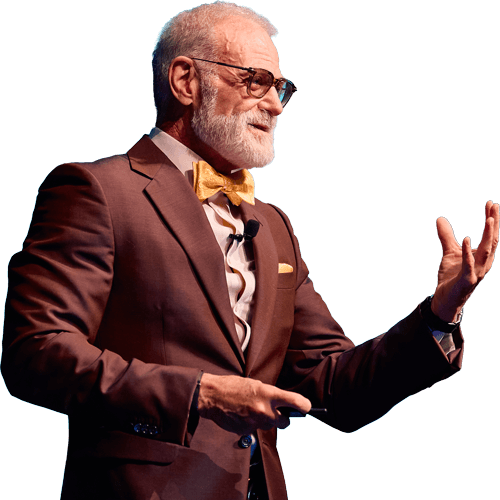
William Seeds, MD
Before establishing the SSRP Institute, Dr. Seeds served as a board-certified orthopedic surgeon and sports medicine specialist for nearly three decades, including Chief of Surgery, Orthopedic Residency Site Director, and Director of The Ohio Bone & Joint Institute for University Hospitals.
His significant contributions to sports medicine have been recognized at the NFL Hall of Fame. He has consulted for athletes across all major sports leagues, including the NFL, NHL, MLB, NBA, and even the performers on “Dancing with the Stars.”
Through his research at the SSRP Institute, Dr. Seeds continues to explore the cellular pathways and mechanisms that positively impact disease and dysfunction in the body as well as optimize physical performance.
Humanin
In-ProgressLesson Resources
Overview
Humanin (HN) is a 24 amino acid mitochondrial derived peptide encoded within the MTRNR2 region of mitochondrial DNA, a short open reading frame inside the 16S ribosomal RNA gene. It was first described in 2001, cloned from surviving neurons in Alzheimer’s brain tissue. Circulating levels decline with age in humans, and the peptide is conserved across worms, mice, primates, and people, where greater availability has tracked with stress resistance and longevity in model systems.
This lesson examines the preclinical and translational evidence so clinicians can place humanin accurately on the spectrum of known, emerging, and uncertain. Several analogs are discussed, including HNG, reported as roughly a thousand times more potent than native humanin, and HNGF6A, which removes IGF binding protein 3 binding to enhance metabolic effects.
Mechanism and receptor signaling
Humanin acts both inside and outside the cell. It is secreted via a pseudo signaling peptide and detected in plasma, CSF, and tissue. Two receptors are described: the CNTFR/WSX1/GP130 trimeric complex, which drives JAK2/STAT3, ERK, and PI3K/AKT signaling tied to cytoprotection and anti apoptosis, and FPRL1, which the peptide competitively antagonizes. Intracellularly, humanin sequesters BAX in the cytoplasm to block its translocation into mitochondria, and it antagonizes IGF binding protein 3, both reducing intrinsic apoptosis.
Therapeutic domains under study
The transcript groups the preclinical signals into several areas, with mechanisms confirmed largely in animal and in vitro work:
- Neuroprotection: chaperone activity against amyloid beta oligomerization, STAT3 driven survival signaling, and reduced microglial inflammatory cytokines.
- Cardioprotection: AMPK/eNOS signaling, with HNG associated with a 50 percent reduction in cardiac infarct size in myocardial ischemia reperfusion models.
- Metabolic regulation: central, hypothalamic STAT3 mediated insulin sensitization and chaperoning of IAPP misfolding relevant to beta cell stress.
- Retinal protection: in vitro protection of retinal pigment epithelial cells from oxidative and mitochondrial stress.
Limits, safety, and clinical status
Human cognitive, cardiovascular, and metabolic data remain observational or correlative. A phase one study in healthy volunteers at a single IV dose reported no adverse ECG or laboratory findings, with mild headache noted; no phase two or three trials exist. The native peptide has a short half life of about five to fifteen minutes, which complicates systemic use and motivates work on pegylation, nanoparticles, and sustained release. Much published efficacy data reflect the HNG analog, so extrapolation to native humanin is unvalidated.
Key clinical points
- Humanin is a mitochondrial derived peptide encoded by MTRNR2; circulating levels decline with age, and children of centenarians show elevated production.
- Core mechanisms span BAX sequestration, STAT3 and PI3K/AKT survival signaling, AMPK/eNOS cardioprotection, and amyloid chaperone activity.
- The evidence base is preclinical and translational; no randomized controlled human trials and no established dosing or long term safety data exist.
- The same anti apoptotic mechanism raises a theoretical concern in active or prior malignancy, which the speaker frames as a contraindication pending data.
- Humanin is not FDA approved and is positioned as a research peptide; any clinical use is investigational and off label, requiring informed consent.

Questions? Our Provider Care Team is here to help.
We'd love to help you determine the best next steps on your Cellular Medicine journey.
Continue your learning journey
VIEW ALLAging-Associated Decline of Phosphatidylcholine Synthesis is a Malleable Trigger of Natural Mitochondrial Aging
Dr. Seeds explores how age-related decline in phosphatidylcholine synthesis may contribute to mitochondrial aging and why that matters in Cellular Medicine. This discussion connects membrane integrity, mitochondrial function, methylation, and metabolic resilience, while highlighting how this pathway may be more modifiable than we once thought.
1. Managing shingles outbreaks in GLP-1 patient through peptides (0:40)
2. Peptide strategies in suspected ALS (15:56)
3. Improving durability in dementia treatment (25:08)
In this bonus episode from the MM15 Virtual Summit, Dr. Seeds addresses an important question around the use of GLP-1s for metabolic balancing in patients who do not need to lose weight. He shares his perspective on what may be considered microdosing, along with the clinical thought process he uses when determining appropriate dosing in these more nuanced cases.
Additional questions from the MM15 Virtual Summit can be found in our accompanying article here: [insert article link]
Access the full MM15 Course here: Mastermind 15 on Aesthetics
The Limits of Alternative Peptide Delivery
Dr. Seeds reviews oral, sublingual, and transdermal peptide delivery, and explains why subcutaneous injection remains the gold standard for most peptides. (Question Link)
A Deeper Look at the RAAS System
Dr. Seeds uses this Rabbit Holes episode to build on Journal Club Episode 87, revisiting the renin-angiotensin-aldosterone system and its broader role in cellular signaling. The discussion focuses on receptor balance, local tissue effects, and the mechanisms linking RAS disruption to inflammation, fibrosis, and mitochondrial stress.(Article Link)
The Renin–Angiotensin–Aldosterone System (RAAS): Beyond Cardiovascular Regulation
Dr. Seeds unpacks how RAS receptor balance drives inflammation, fibrosis, mitochondrial dysfunction, and tissue remodeling, far beyond its classical role in blood pressure regulation. (Article Link)
1. SSRI tapering resistance, anxiety during weaning (0:40)
2. Progressive multifocal dystonia (13:27)
3. Complex type 2 diabetes case in a lean, athletic patient (28:32)