Peptide Therapy Foundations: Skin Resilience
Course Details
This course examines the peptides applied to the skin and its appearance: the topical signal peptides that influence collagen and expression lines, the copper-binding repair peptide, and the melanocortin agonists that act on pigmentation. It is written for clinicians who want to understand how these agents work and how the cosmetic evidence behind them should be read.
The lessons cover several families. Palmitoyl Pentapeptide-4 and the neuromodulating peptides Argireline and Leuphasyl act on collagen signaling and the muscle-contraction pathway behind expression lines. GHK-Cu is a copper-carrier peptide studied for repair and remodeling. Melanotan I and Melanotan II are melanocortin agonists that act on pigmentation through the melanocortin receptors. The maturity of the evidence varies across the group.
Each lesson follows the same clinical lens: what the agent is, how it works, what the evidence shows, and what a practitioner weighs before applying it. Together they map the skin peptides as a group so you can reason about each one against the others.
SSRP FACULTY
William Seeds, MD
William Seeds, MD
William Seeds, MD
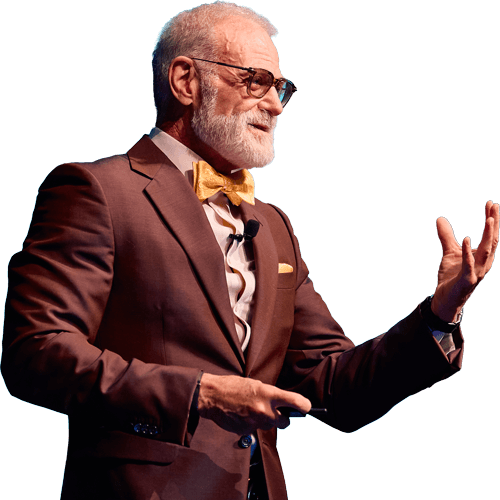
Before establishing the SSRP Institute, Dr. Seeds served as a board-certified orthopedic surgeon and sports medicine specialist for nearly three decades, including Chief of Surgery, Orthopedic Residency Site Director, and Director of The Ohio Bone & Joint Institute for University Hospitals.
His significant contributions to sports medicine have been recognized at the NFL Hall of Fame. He has consulted for athletes across all major sports leagues, including the NFL, NHL, MLB, NBA, and even the performers on “Dancing with the Stars.”
Through his research at the SSRP Institute, Dr. Seeds continues to explore the cellular pathways and mechanisms that positively impact disease and dysfunction in the body as well as optimize physical performance.
GHK-Cu
In-ProgressLesson Resources
Overview
GHK-Cu is an endogenous copper-binding tripeptide, first described from human plasma albumin and also sourced through SPARC and proteolysis. Its amino acid sequence is glycine, histidine, lysine bound to copper, and its affinity for copper exceeds that of albumin. In the skin context, this lesson looks at how the peptide is applied topically for resilience and how the same mechanisms can be approached systemically.
The topical use sits in a defined regulatory space. GHK-Cu is not approved for human-use indications and has no approved systemic use, but it is permitted cosmetically as Copper Peptide-1 at concentrations from 0.01% to 1%, provided the cosmetic labeling does not reference the molecular mechanisms discussed here. It is compounded as a serum or cream for topical use and subcutaneously, though there is no published IV data.
How it works in skin
In the extracellular matrix, GHK-Cu increases collagen types I and III, elastin, and glycosaminoglycans across preclinical and human studies. It modulates the TGF-beta and SMAD pathway in a context-dependent way, acting as a connective-tissue modulator that can shift between antifibrotic and pro-regenerative modes depending on the tissue state. It inhibits NF-kB by blocking P65 translocation, which lowers TNF-alpha, IL-6, and IL-1 beta in preclinical work, and it activates the NRF2-ARE antioxidant pathway, raising superoxide dismutase and glutathione peroxidase expression. As a copper tripeptide it also helps silence copper redox chemistry by binding copper tightly rather than leaving it free.
Human evidence and the inside-out approach
Topical human studies have reported improved skin firmness, density, and thickness, with reduced fine lines and wrinkles over eight to twelve weeks. Collagen production has been noted to increase in skin biopsies, and one randomized double-blind study reported reduced wrinkle volume. Decades of cosmetic use show a favorable safety profile, with only transient redness or irritation and rare allergic reactions reported.
The systemic, or inside-out, approach targets the same fibroblasts, keratinocytes, and melanocytes from within. Reported subcutaneous dosing ranges from 0.5 to 2.5 mg, often cycled on and off. Systemic safety, human pharmacokinetics, and large-scale controlled data remain unconfirmed, so this register stays clearly separated from the validated topical use.
Key clinical points
- GHK-Cu is an endogenous copper-binding tripeptide (glycine-histidine-lysine) with copper affinity exceeding albumin.
- Topical cosmetic use is permitted at 0.01% to 1% as Copper Peptide-1; it is not approved for systemic indications.
- Mechanisms include matrix collagen and elastin support, context-dependent TGF-beta/SMAD modulation, NF-kB inhibition, and NRF2-ARE antioxidant activation.
- Human evidence supports skin and cosmetic use; systemic safety and human pharmacokinetics are unconfirmed.
- Distinguish validated topical use from unvalidated systemic extrapolation when applying this clinically.

Questions? Our Provider Care Team is here to help.
We'd love to help you determine the best next steps on your Cellular Medicine journey.
Continue your learning journey
VIEW ALLAging-Associated Decline of Phosphatidylcholine Synthesis is a Malleable Trigger of Natural Mitochondrial Aging
Dr. Seeds explores how age-related decline in phosphatidylcholine synthesis may contribute to mitochondrial aging and why that matters in Cellular Medicine. This discussion connects membrane integrity, mitochondrial function, methylation, and metabolic resilience, while highlighting how this pathway may be more modifiable than we once thought.
1. Managing shingles outbreaks in GLP-1 patient through peptides (0:40)
2. Peptide strategies in suspected ALS (15:56)
3. Improving durability in dementia treatment (25:08)
In this bonus episode from the MM15 Virtual Summit, Dr. Seeds addresses an important question around the use of GLP-1s for metabolic balancing in patients who do not need to lose weight. He shares his perspective on what may be considered microdosing, along with the clinical thought process he uses when determining appropriate dosing in these more nuanced cases.
Additional questions from the MM15 Virtual Summit can be found in our accompanying article here: [insert article link]
Access the full MM15 Course here: Mastermind 15 on Aesthetics
The Limits of Alternative Peptide Delivery
Dr. Seeds reviews oral, sublingual, and transdermal peptide delivery, and explains why subcutaneous injection remains the gold standard for most peptides. (Question Link)
A Deeper Look at the RAAS System
Dr. Seeds uses this Rabbit Holes episode to build on Journal Club Episode 87, revisiting the renin-angiotensin-aldosterone system and its broader role in cellular signaling. The discussion focuses on receptor balance, local tissue effects, and the mechanisms linking RAS disruption to inflammation, fibrosis, and mitochondrial stress.(Article Link)
The Renin–Angiotensin–Aldosterone System (RAAS): Beyond Cardiovascular Regulation
Dr. Seeds unpacks how RAS receptor balance drives inflammation, fibrosis, mitochondrial dysfunction, and tissue remodeling, far beyond its classical role in blood pressure regulation. (Article Link)
1. SSRI tapering resistance, anxiety during weaning (0:40)
2. Progressive multifocal dystonia (13:27)
3. Complex type 2 diabetes case in a lean, athletic patient (28:32)