
Peptide Therapy Foundations: Skin Resilience
Course Details
This course examines the peptides applied to the skin and its appearance: the topical signal peptides that influence collagen and expression lines, the copper-binding repair peptide, and the melanocortin agonists that act on pigmentation. It is written for clinicians who want to understand how these agents work and how the cosmetic evidence behind them should be read.
The lessons cover several families. Palmitoyl Pentapeptide-4 and the neuromodulating peptides Argireline and Leuphasyl act on collagen signaling and the muscle-contraction pathway behind expression lines. GHK-Cu is a copper-carrier peptide studied for repair and remodeling. Melanotan I and Melanotan II are melanocortin agonists that act on pigmentation through the melanocortin receptors. The maturity of the evidence varies across the group.
Each lesson follows the same clinical lens: what the agent is, how it works, what the evidence shows, and what a practitioner weighs before applying it. Together they map the skin peptides as a group so you can reason about each one against the others.
SSRP FACULTY
William Seeds, MD
William Seeds, MD
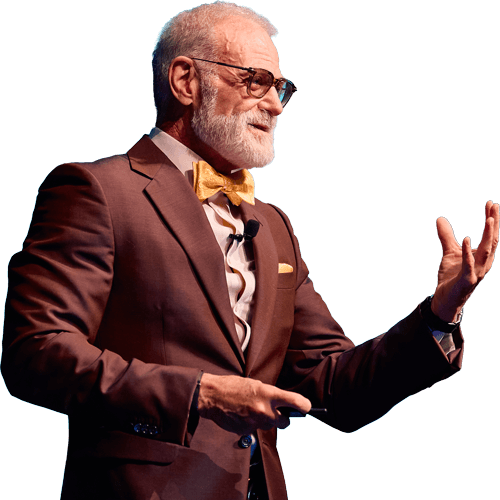
William Seeds, MD
Before establishing the SSRP Institute, Dr. Seeds served as a board-certified orthopedic surgeon and sports medicine specialist for nearly three decades, including Chief of Surgery, Orthopedic Residency Site Director, and Director of The Ohio Bone & Joint Institute for University Hospitals.
His significant contributions to sports medicine have been recognized at the NFL Hall of Fame. He has consulted for athletes across all major sports leagues, including the NFL, NHL, MLB, NBA, and even the performers on “Dancing with the Stars.”
Through his research at the SSRP Institute, Dr. Seeds continues to explore the cellular pathways and mechanisms that positively impact disease and dysfunction in the body as well as optimize physical performance.
Leuphasyl
In-ProgressLesson Resources
Overview
Leuphasyl, known by the INCI designation pentapeptide-18, is a five-amino-acid sequence used as a topical cosmetic ingredient rather than a drug. It belongs to the same category of neurotransmitter-inhibiting peptides as Argireline, and it is discussed here in terms of mechanism, evidence, and clinical application. It is regulated as a cosmetic ingredient and is not FDA approved as a drug.
The peptide acts as an enkephalin mimetic. It binds the delta opioid receptor on presynaptic nerve terminals, a receptor coupled to inhibitory G proteins. This is a different route from the SNARE-targeting peptides, so it works upstream of vesicle docking.
How it works
Receptor activation triggers G-protein subunit dissociation. The released subunits close voltage-gated calcium channels and open potassium channels, which holds the neuron at a more negative resting potential. Without calcium influx, synaptic vesicle fusion is reduced, so acetylcholine release into the neuromuscular junction is modulated rather than abolished. The effect is reversible. Lowered acetylcholine reduces muscle contraction intensity, and repeated application over weeks is associated with progressive smoothing of expression lines.
Comparison and synergy
Leuphasyl can be contrasted with related actives by their target step in the neuromuscular cascade. Botulinum toxin cleaves SNAP-25 for a complete, irreversible block. Argireline competes for SNARE assembly for a reversible partial block. Leuphasyl acts further upstream at the calcium channel. Because these mechanisms are independent, in vitro glutamate-release models reported additive effects: roughly 32 percent inhibition for Leuphasyl alone and about 57 percent when combined with Argireline, a value the source described as similar to botulinum toxin in that assay. The Argireline plus Leuphasyl combination is marketed under the trade name Argireline.
Evidence and limitations
Reported cosmetic studies identified roughly a 2 percent concentration as a threshold for measurable wrinkle reduction in the frontal and periorbital areas over a 60-day course. Safety data in the cited literature showed no cytotoxicity to fibroblasts or keratinocytes, negative genotoxicity, and no ocular irritation. The speaker also noted an emerging D-tyrosine-modified analog with anti-melanogenic, skin-brightening signals in skin models, while emphasizing that no human depigmentation trials exist. The body of evidence remains limited: no randomized controlled trials, no independent replication, no human pharmacokinetic or skin-penetration data, and no studies across diverse skin types.
Key clinical points
- Leuphasyl is pentapeptide-18, a topical cosmetic ingredient and not an FDA-approved drug.
- It modulates acetylcholine release via delta opioid receptor binding, closing calcium channels upstream of vesicle docking; the effect is reversible.
- Its mechanism is independent of SNARE-targeting actives, supporting additive results when combined with Argireline.
- Cosmetic studies suggest a 2 percent threshold concentration with wrinkle reduction around 28 to 35 percent over 60 days.
- Evidence is constrained: no randomized controlled trials, no independent replication, and no human pharmacokinetic or penetration data.

Questions? Our Provider Care Team is here to help.
We'd love to help you determine the best next steps on your Cellular Medicine journey.
Continue your learning journey
VIEW ALLAging-Associated Decline of Phosphatidylcholine Synthesis is a Malleable Trigger of Natural Mitochondrial Aging
Dr. Seeds explores how age-related decline in phosphatidylcholine synthesis may contribute to mitochondrial aging and why that matters in Cellular Medicine. This discussion connects membrane integrity, mitochondrial function, methylation, and metabolic resilience, while highlighting how this pathway may be more modifiable than we once thought.
1. Managing shingles outbreaks in GLP-1 patient through peptides (0:40)
2. Peptide strategies in suspected ALS (15:56)
3. Improving durability in dementia treatment (25:08)
In this bonus episode from the MM15 Virtual Summit, Dr. Seeds addresses an important question around the use of GLP-1s for metabolic balancing in patients who do not need to lose weight. He shares his perspective on what may be considered microdosing, along with the clinical thought process he uses when determining appropriate dosing in these more nuanced cases.
Additional questions from the MM15 Virtual Summit can be found in our accompanying article here: [insert article link]
Access the full MM15 Course here: Mastermind 15 on Aesthetics
The Limits of Alternative Peptide Delivery
Dr. Seeds reviews oral, sublingual, and transdermal peptide delivery, and explains why subcutaneous injection remains the gold standard for most peptides. (Question Link)
A Deeper Look at the RAAS System
Dr. Seeds uses this Rabbit Holes episode to build on Journal Club Episode 87, revisiting the renin-angiotensin-aldosterone system and its broader role in cellular signaling. The discussion focuses on receptor balance, local tissue effects, and the mechanisms linking RAS disruption to inflammation, fibrosis, and mitochondrial stress.(Article Link)
The Renin–Angiotensin–Aldosterone System (RAAS): Beyond Cardiovascular Regulation
Dr. Seeds unpacks how RAS receptor balance drives inflammation, fibrosis, mitochondrial dysfunction, and tissue remodeling, far beyond its classical role in blood pressure regulation. (Article Link)
1. SSRI tapering resistance, anxiety during weaning (0:40)
2. Progressive multifocal dystonia (13:27)
3. Complex type 2 diabetes case in a lean, athletic patient (28:32)